
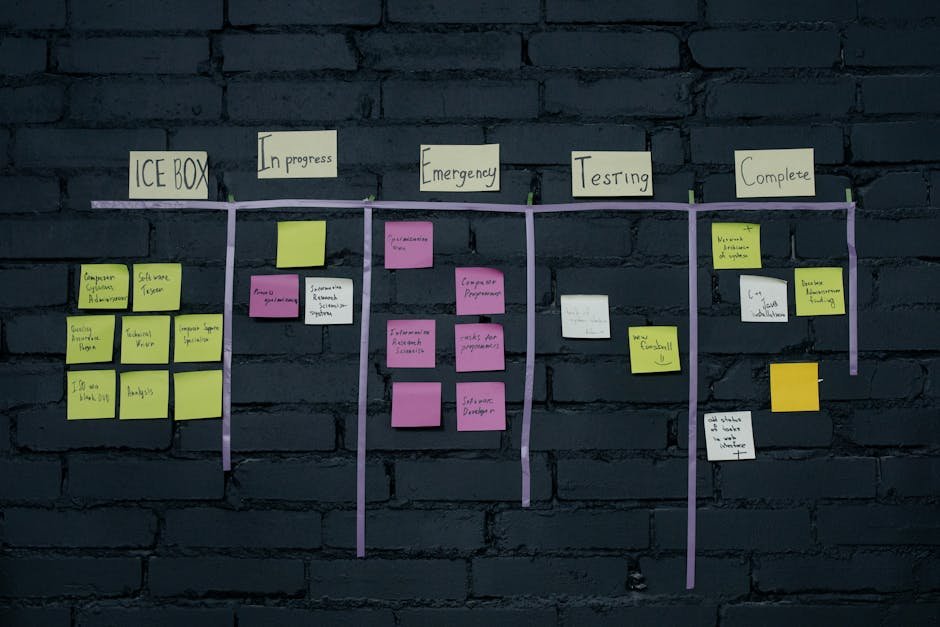
From Traditional to Agile: Revamping Team Collaboration
In today’s fast-paced business environment, traditional collaboration methods are proving inadequate. Many companies are turning to agile approaches to enhance teamwork and adaptability.

In today’s fast-paced business environment, traditional collaboration methods are proving inadequate, stymieing innovation and flexibility. Many companies are turning to agile approaches to enhance teamwork and adaptability, aiming to improve project outcomes and employee satisfaction.
As markets become more dynamic and customer demands more complex, the need for teams to operate with greater speed and responsiveness becomes crucial. This shift is not merely a trend but a strategic imperative that can determine a company’s ability to compete and innovate in a crowded marketplace.
Identifying Inefficiencies in Traditional Models
Traditional team collaboration often relies on rigid hierarchies and fixed roles, leading to silos and slow decision-making. For example, in a typical traditional setting, decisions must travel up and down the hierarchy, causing delays and often leading to outdated solutions by the time they are implemented. The 2021 Global State of Enterprise Efficiency Report highlighted that 30% of time is wasted in conventional settings due to these inefficiencies.
Moreover, the lack of flexibility in traditional models fails to accommodate the diverse working styles and schedules of modern workforces, leading to decreased engagement and productivity.
Advantages of Agile in Team Collaboration
Switching to an agile framework facilitates a more fluid and responsive environment wherein team members have the autonomy to make decisions quickly. This method not only speeds up project timelines but also boosts morale and engagement among team members. Companies like Spotify and Google have successfully implemented agile techniques, resulting in faster turnaround times and increased innovation.
Agile methods embrace adaptable planning, evolutionary development, early delivery, and continual improvement, all fostering an environment that supports creative problem-solving and rapid response to changes.
Implementing Agile Across Different Teams
Introducing agile practices is not confined to tech teams but can be effectively applied across various departments including marketing, human resources, and customer service. Each team can adapt the core principles of agile to their specific needs, creating a custom approach that supports their unique workflows and goals.
For instance, a marketing team might use sprints to manage campaign rollouts, while HR could implement scrum techniques to streamline recruitment processes, enhancing flexibility and reducing time-to-hire.
Overcoming Challenges in Agile Adoption
While the transition to agile can deliver significant benefits, it also comes with challenges such as resistance to change, the need for extensive training, and initial decreases in productivity as teams adjust. Successful adoption requires careful planning, clear communication of benefits, and providing ongoing support and training for all team members.
Leaders must foster an open culture that embraces experimentation and learning from failures, essential for the success of agile methodologies.
In conclusion, as businesses strive to remain competitive and pertinent in the digitized, rapidly changing market landscape, agile methodologies offer a compelling advantage. By adopting agile, companies can improve their team collaboration, adapt more quickly to market changes, and enhance overall productivity, ensuring they are not only surviving but thriving in their respective industries.