Why profitable small firms still run out of cash
Cash flow management and forecasting decide whether a profitable small firm survives late payers. Here is what to track, and where the evidence runs out.
Business & Strategy · 3 October 2026 · 6 min read
Key takeaways
- Profitable-looking firms can still fail for lack of cash, and long customer payment terms are a frequent cause, so set terms deliberately and chase on the day an invoice goes overdue.
- The cash basis simplifies records but leaves out debtors and creditors, so keep a separate list of unpaid invoices and bills with due dates.
- Forecast receipts on the date each customer actually tends to pay, and watch the lowest projected balance rather than the closing one.
- Borrow against a forecast shortfall only when it is temporary; if the problem is structural, finance just adds interest to it.
You have invoiced the work, the order book looks healthy, and the bank balance still will not cover payroll at the end of the month. That gap between what you have earned and what you hold is what cash flow forecasting is for. The Insolvency Service tells directors that a lack of cash is among the most significant factors in UK company failures, even among firms that appear to be trading effectively, and that payment terms of 30 to 90 days are a frequent source of the risk (Insolvency Service, 2023).
Trading well does not mean being paid
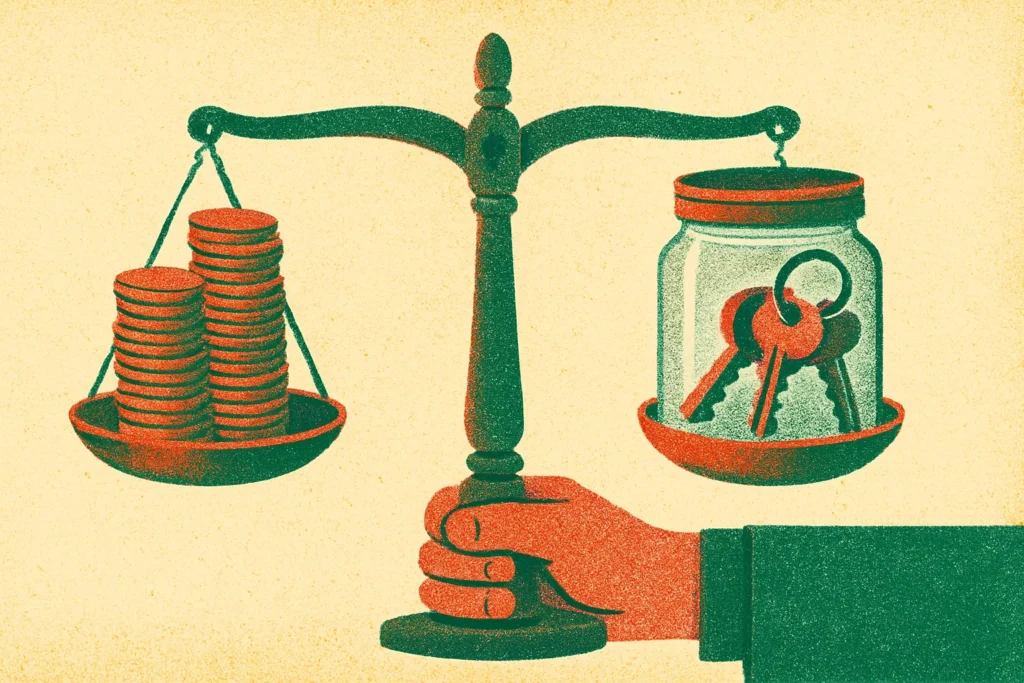
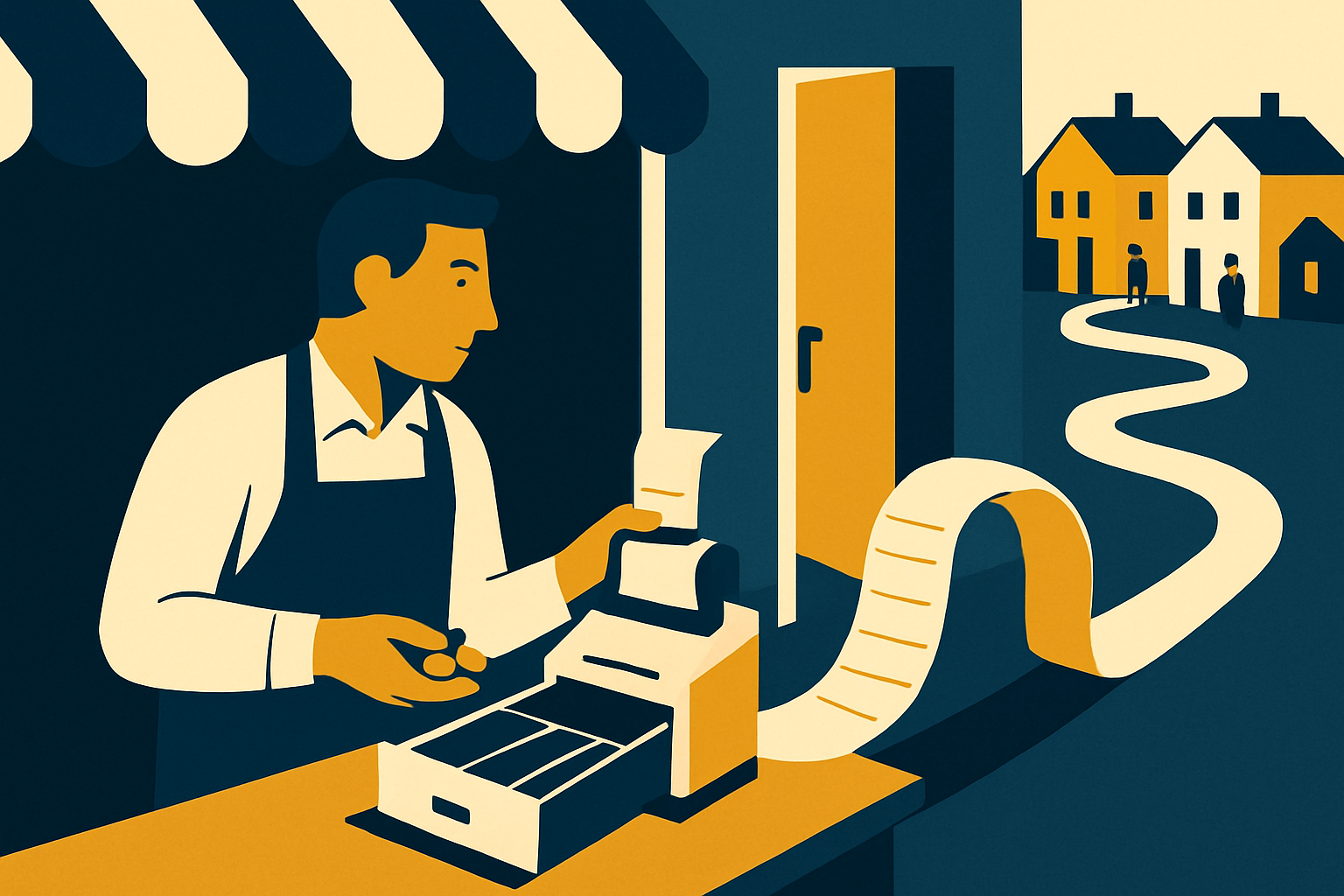
A profit and loss account records work done. A bank statement records money received. Between the two sits a queue of unpaid invoices, and the longer your customers’ payment terms, the longer that queue. If you pay staff and suppliers monthly while customers take 60 or 90 days, you are lending them money interest-free, and you must fund that loan from your own pocket or from a lender.
The stakes reach beyond individual firms. SMEs accounted for 60% of private-sector employment and 51% of turnover at the start of 2025 (Department for Business & Trade, 2025), so a cash squeeze among them is a squeeze on most of the jobs in the private sector.
The practical lesson is that payment terms are a financial decision, not an admin detail. Every extra 30 days you allow is a cost you carry. Put terms on the quote as well as the invoice, and chase on the day an invoice goes overdue, not a month later. It is unglamorous, and it is usually the cheapest cash flow fix a small firm has.
Good forecasts start with clean records
You cannot forecast from records you do not trust, so the first step is dull: a business bank account, used for business only. According to business.gov.uk, it helps you track and manage cash flow, gives you clearer financial records, helps establish credit, opens access to finance products and keeps personal and business money apart (business.gov.uk, 2026). That last point matters more than it sounds. If drawings and trading receipts mingle in one account, any forecast built from it will be wrong.

Some small firms can go further and use the cash basis. HMRC’s Business Income Manual describes it as recording income and expenses when money is actually received and paid, which means debtors, creditors, stock and work in progress drop out of the records (HMRC, 2026). For an eligible business that means fewer entries and books that mirror the bank statement, which is what you want when cash is the question.
The trade-off is plain. Debtors and creditors, the two lists that drive a cash forecast, are exactly what the cash basis leaves out. If you adopt it, keep a separate list of unpaid invoices and bills with their due dates, or you will have simplified your accounts by hiding the thing most likely to sink you. Eligibility has conditions, so confirm with your accountant before switching.
A forecast is a dated list, not a spreadsheet exercise
A cash forecast answers one question: on which dates does money arrive and leave, and does the balance stay above zero? Begin with today’s balance. Add receipts on the date you expect to be paid, not the date you invoice. Subtract payroll, rent, tax, loan repayments and supplier bills on their due dates. The lowest point on the resulting line matters more than the closing figure, because that is the day you could miss a payment.
Be honest about receipts. If a customer has paid at around 55 days on its last three jobs, forecast 55, not the 30 written in the contract. Then update the forecast weekly and compare it with what actually happened. The gaps show you which customers and which costs you consistently misjudge, and that is where the forecast starts to earn your trust.
A shortfall you can see weeks ahead is one you can act on; one you discover when the account runs dry is a crisis. The cost of seeing it early is a regular slot in the diary.
External finance buys time, not a cure
Plenty of firms reach for outside money. The British Business Bank reports that around half of smaller businesses sought external finance in 2025, with increased use of flexible forms of finance to support cash flows (British Business Bank, 2026). Separately, the Department for Business & Trade’s Small Business Survey shows external finance use among SMEs rising from 8.2% in 2021 to 15.9% in 2024 (Department for Business & Trade, 2024). Either way, more firms are leaning on outside money.
Borrowing against a forecast shortfall makes sense when the shortfall is temporary, such as a large invoice due in three weeks. It is a poor answer when the problem is structural: terms too generous, margins too thin, costs rising faster than receipts. Then finance postpones the problem and adds interest to it. Forecasting is how you tell the two cases apart, and it lets you approach a lender early, with a plan, rather than in a panic. Compare the total cost of any facility, not only the headline rate.
What to watch from here
The order of work is simple: clean records, deliberate payment terms, a weekly forecast, and borrowing only against a shortfall you can explain. Two numbers tell you most of what you need: the lowest projected balance over the coming quarter, and the age of your oldest unpaid invoice. If either gets worse for two weeks running, act before the bank, or a creditor, forces the issue.
Do this next
- Ask your bookkeeper or accountant for a list of every unpaid invoice, with its due date and days overdue.
- List expected receipts and payments by date for the next 12 weeks, using each customer’s real payment pattern rather than contract terms.
- Move personal spending out of the business account, or open a separate business account if you do not have one.
- Ask your accountant whether you are eligible for the cash basis and what separate records you would need to keep if you switch.
- Book a 30-minute weekly slot to compare the forecast with what actually happened and roll it forward.
Sources
- Insolvency Service, director information hub: guidance on cash flow (2023)
- Department for Business & Trade, Business Population Estimates 2025 (2025)
- business.gov.uk, getting a business bank account (2026)
- HMRC, Business Income Manual BIM72005: cash basis (2026)
- British Business Bank, Small Business Finance Markets Report 2026 (2026)
- Department for Business & Trade, Small Business Survey 2024 panel report (2024)
Related reading
How Luminary Solutions approaches this
At Luminary Solutions, we help founders turn strategy into working systems: pricing, processes and the numbers behind them. If you’re making a decision that will shape the next few years, let’s talk it through.
Luminary Media explores AI, systems and strategy shaping modern businesses. Written for founders, operators and decision-makers.