The Domino’s turnaround worked because the pizza changed first
The Domino’s turnaround began with a recipe rewrite, not an app. Digital then compounded the gain. What smaller firms can copy, and what they cannot.
Business & Strategy · 2 October 2026 · 4 min read
Your customers have decided your product is mediocre, and your advertising only reminds them. That was Domino’s position in late 2009, and the Domino’s turnaround that followed is a useful test for any owner tempted to fix a reputation problem with marketing alone. The chain ranked last among the three largest national pizza chains on taste, after years of putting speed and delivery ahead of flavour. Its share price had fallen by more than half since early 2008 (source).
The Domino’s turnaround began with an admission it could back up
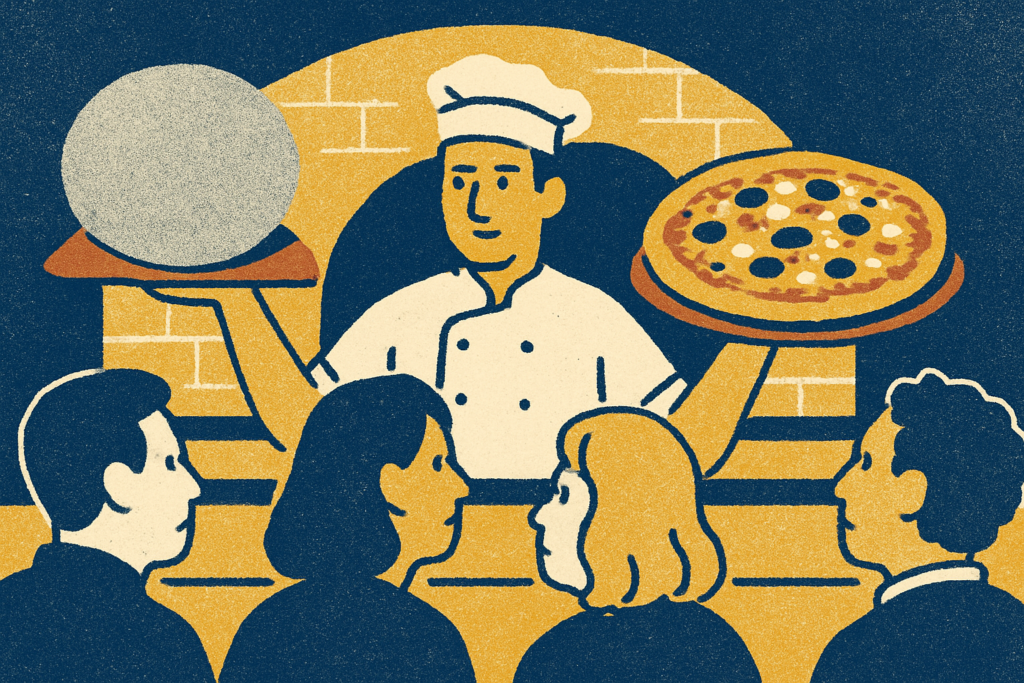
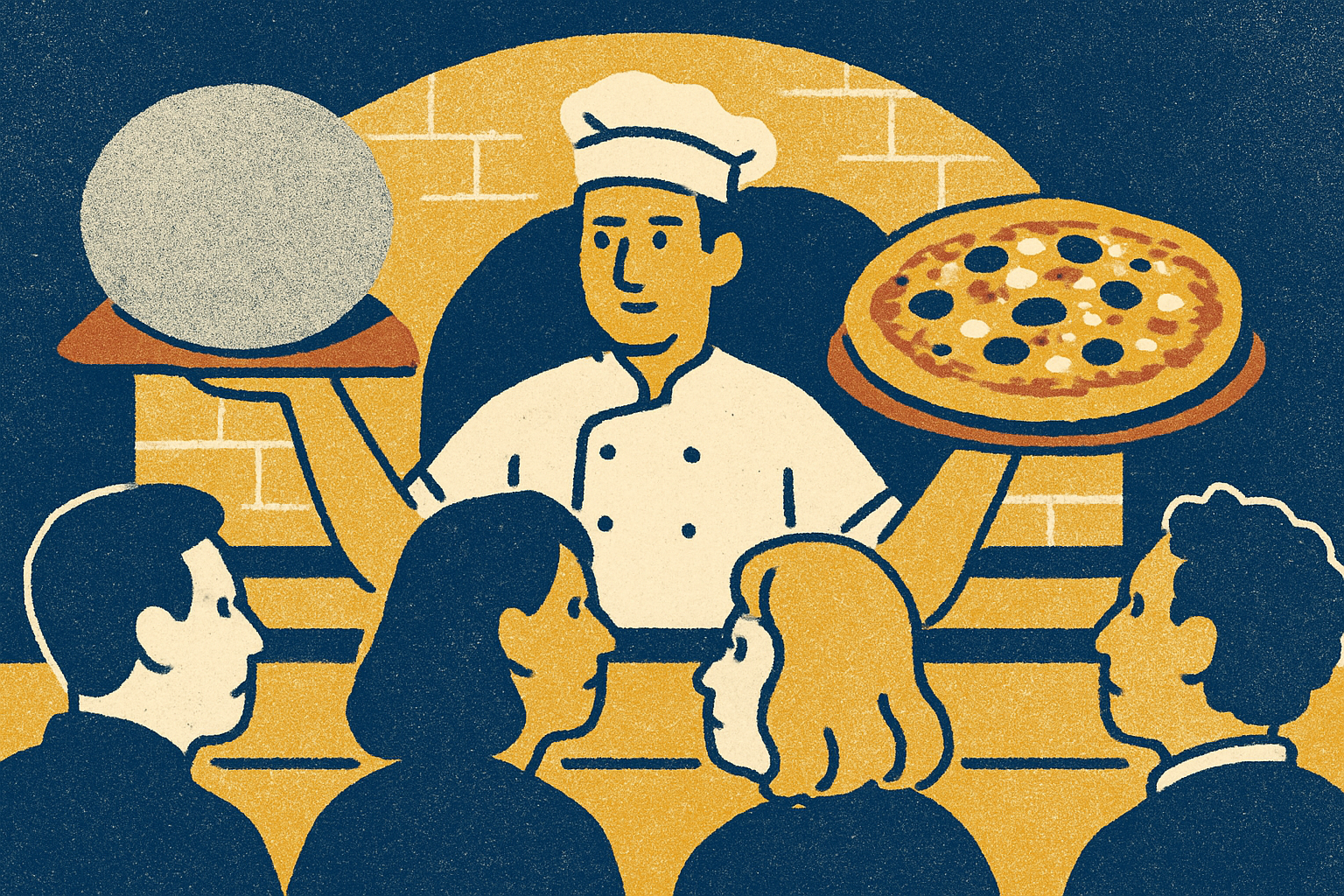
In December 2009 Domino’s launched its "Pizza Turnaround" campaign by publicly admitting that its pizza tasted like "cardboard" (source). It then reworked its crust, sauce and cheese (source). The order of events matters. A public confession works as a promise: it gives lapsed customers a reason to try you again. The product then has to deliver on that single retrial.
The numbers suggest it did. In the first quarter after launch, same-store sales rose 14.3%, the largest quarterly increase recorded by a major fast-food chain at that time (source). One case study reports more than 30 consecutive quarters of same-store sales growth, with US market share rising from roughly 9% to over 15% (source).
The failure mode is easy to see. Admit a weakness without fixing it and you have written your critics’ headline for them. Candour is cheap to announce and expensive to honour. Reformulating a core product costs money, and it may unsettle the customers you still have. A smaller business carries less of that cost than a national chain, but the risk is the same. If the second visit disappoints, you rarely get a third.
One caveat. These are case-study accounts, and none of them can separate the effect of the campaign from the effect of the recipe. I would not credit the honesty alone. The sensible reading is that the honesty got people to try the new product and the product kept them.
Digital ordering made the gains compound
A recovery built on a single campaign tends to fade. What kept Domino’s growing was a shift in how customers bought. By 2020 the company was the largest pizza company in the world by retail sales, at more than US $16.1 billion (US $8.3 billion in the US, US $7.8 billion abroad). Over 70% of US sales and more than half of global retail sales came through digital channels (source). By September 2026 the US digital share was above 85% (source).
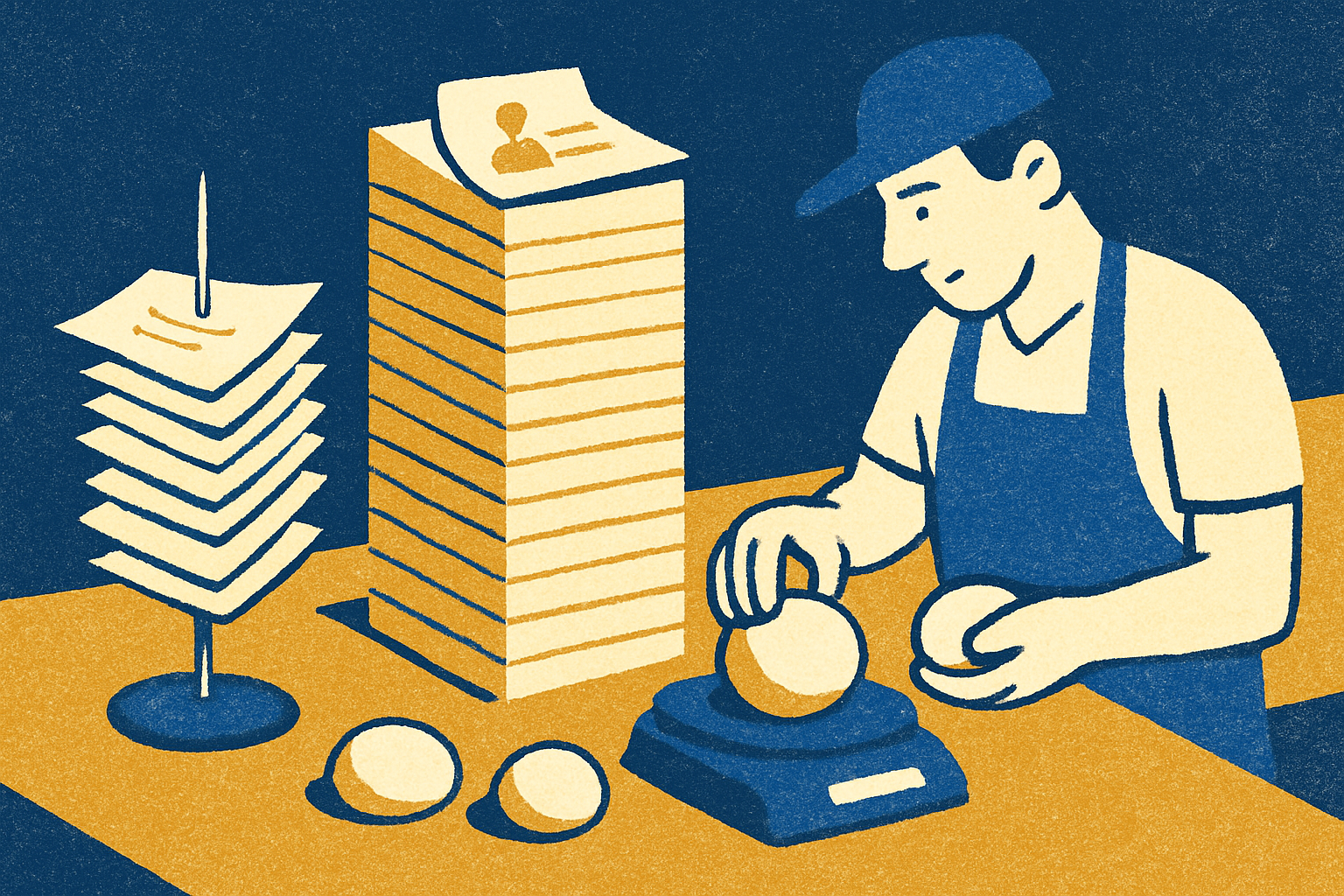
The mechanism is simple. Every digital order is a record of who bought, what, when and how often. A phone call or a walk-in leaves almost nothing behind. A digital order leaves a customer you can contact, a basket you can learn from and a pattern you can forecast. A one-off bounce becomes a repeat habit, and that is where compounding comes from.
The scale is the part you cannot copy. Domino’s puts over US $150 million a year into technology (source). No firm with a handful of sites will match that, and it should not try. There are trade-offs too. Your own ordering channel needs maintaining, and it only pays if customers actually use it. Third-party marketplaces are cheaper to start with, but they keep the customer record for themselves. The principle that transfers is to capture the order and own the relationship, at whatever scale you can afford.
Loyalty data and AI are the parts a smaller firm can copy
Domino’s Rewards was relaunched in 2023 and had 37.3 million active members by 2026. The programme works as a data engine for targeted marketing (source). The company also uses AI across its stores for demand forecasting, scheduling, inventory and waste reduction (source).
The reported results are strong. Domino’s has had 11 straight years of market-share gains. US same-store sales rose 3.7% in the fourth quarter of 2025 and about 3% across the year. Carryout business reached US $4.4 billion, and franchisee profitability rose to roughly $166,000 per store (source).
Treat those figures with some care. They come from a single agency write-up, not from company filings. The operational point still stands. Forecasting and waste reduction are unglamorous, and they are where a business’s margin is made or lost. A smaller firm can do a cruder version with a spreadsheet of repeat customers and its own order history. The question is the same one a chain asks: how much will we sell on a Tuesday, and how much stock does that need?
The failure mode here is collecting data with no decision attached. A loyalty list nobody mines is a cost. Before you build one, name the decision it will change. That might be who gets an offer, what you stock, or when you staff up.
What to do before you copy the Domino’s turnaround
The sequence is the lesson, so follow it in order.
- Test whether the problem is the product. If customers are leaving because of what you sell, advertising will not bring them back. Ask the ones who left.
- Fix first, announce second. Make the change, check it holds up on a busy day, and only then tell people about it.
- Capture every order. Whatever channel you use, make sure you end up with a customer record you own.
- Attach one operational decision to the data. Forecasting, stock or staffing will do. If the data changes nothing, stop collecting it.
Be wary of the neat version of this story. The research behind it has gaps. I could not verify the reported stock-price rise or later market-share figures against company filings. I also found no independent evidence on how customer sentiment changed beyond the sales and digital figures. The sound conclusion is narrower than the legend: an honest admission followed by a real product change, then a system that turns first-time buyers into regulars. Watch for that sequence in your own business, and be sceptical of any plan that skips the first step.
Sources
- Domino’s Pizza Turnaround Case Study
- Dominos’ digital transformation
- Insights into Domino’s digital strategy
- Domino’s product challenges
- Domino’s global retail sales data
How Luminary Solutions approaches this
At Luminary Solutions, we help founders turn strategy into working systems: pricing, processes and the numbers behind them. If you’re making a decision that will shape the next few years, let’s talk it through.
Luminary Media explores AI, systems and strategy shaping modern businesses. Written for founders, operators and decision-makers.
Stay ahead with Luminary Media
Weekly insights on AI automation, marketing systems and digital strategy, delivered to your inbox.